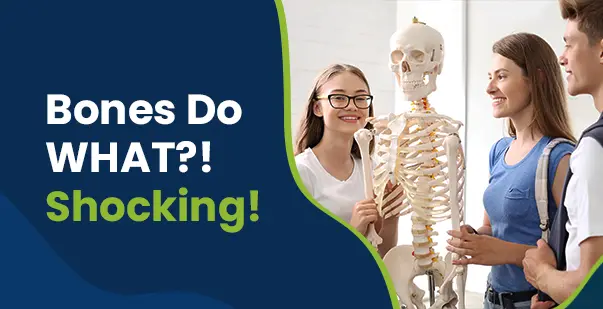
The adult human skeletal system has 206 bones, but we are born with nearly 300. According to a study by the National Institutes of Health (NIH), many of these bones fuse together as we grow, shaping the framework that holds our body upright and protects vital organs. Yet, a common misconception is that bones are just lifeless structures.
In reality, they’re living tissues that constantly renew themselves and play a key role in everything from movement to blood cell production. This hidden architecture shields vital organs, produces essential blood cells, stores minerals, and enables our every movement. From the delicate bones of our inner ear to the massive femur that bears our weight, each component plays a specific role in this masterpiece of natural engineering. So, keep reading more about the human skeletal system, its anatomy, functions and more.
What Are the Primary Parts of the Human Skeletal System?
The human skeleton system contains all your bones. It also includes connective tissue that helps you stay safe and supported while you’re moving and still. The system further includes muscles that help you move and create new blood cells to help you remain healthy. Meanwhile, its primary parts are:
Bones
Bones are the main form of structural support for your body. Adults have 206 bones in their bodies. These bones often vary in shape and size while serving several unique functions. This involves providing movements and protecting certain key organs. The thigh bone, or femur, is the strongest and longest bone in the body.
Muscles
Muscles are made of stretchy, tightly woven fibers. Humans have over 600 muscles in their body, which help them do everything from running, walking, and jumping to breathing and digesting food. Muscles work by contracting and relaxing in response to signals from the nervous system to enable precise and coordinated movements.
There are two types of muscles: cardiac and skeletal. The characteristic difference between cardiac and skeletal muscle cells lies in their function and control. Cardiac muscles are involuntary and found only in the heart, while skeletal muscles are voluntary and attached to bones for movement.
Cartilage
Cartilage is a flexible, strong tissue that acts like a shock absorber in joints throughout the human body. It provides cushioning between bones to reduce friction and prevent wear and tear. Unlike bones, it lacks blood vessels and makes it slower to heal when damaged.
Ligaments
Ligaments refer to bands of tissues that often connect bones with other bones. They provide stability to joints by limiting excessive movement and preventing dislocations. Ligaments are strong yet flexible, and they allow controlled motion while supporting skeletal integrity.
Tendons
Tendons refer to specific cords in your body that connect muscles with bones. They play a key role in movement by transmitting the force generated by muscles to the bones. This process allows smooth motion in your body. Tendons are made of strong, fibrous connective tissue that can withstand tension and stress. Proper tendon health is key to ensuring flexibility, strength, and injury prevention in daily activities and sports.
Joints
Joints are the locations in the body where two or more bones meet. They allow multiple bodily movements like simple bending or complex rotational motions. Ligaments, cartilage, and tendons also support the joints for better stability and flexibility.
Read More: Life Support: Information, Ethics & Decision-making
Functions of the Human Skeletal System
The human skeletal system comprises cartilage, bones, and connective tissues. This structural framework of the human body fulfills multiple functions efficiently every day. The following are the key functions of the skeletal system:
Support
Bones provide structural support to the body to help maintain its shape and prevent it from collapsing. Your weight is mostly supported by your skeleton, which is connected to tissues to provide more stability. This allows better posture and movement while protecting internal organs from external forces like collisions or pressure.
Protection
The human skeletal system also protects key organs such as the brain, heart, and lungs from damage or injury. For instance, the skull is responsible for safeguarding the brain, while the rib cage protects your lungs and the heart.
Movement
Bones, in conjunction with muscles, promote better movement of your body by acting as levers. They provide multiple attachment points for muscles and joints. You won’t be able to do coordinated movements like bending or jumping without bones. The skeletal system also works with tendons and ligaments for better stability during physical activities.
Mineral Storage
Bones act as important storage sites for essential minerals, especially calcium and phosphorus. These minerals are required in different bodily functions, such as muscle contraction, nerve signaling, and maintaining a steady heartbeat. When the body needs more of these minerals, bones release them into the bloodstream to help maintain proper balance or homeostasis. This process ensures that critical physiological functions can continue without disruption. Additionally, the storage and release of minerals support ongoing bone remodeling, which helps keep bones healthy, strong, and adaptable throughout life.
Blood Cell Production
Specialized cells within the bone marrow produce white blood cells, red blood cells, and platelets through a process called hematopoiesis. It is helpful for your body’s immune function and oxygen transport. This continuous production of blood cells can easily replace old or damaged cells and ensures the body remains healthy and functions optimally.
Endocrine Regulation
Bones secrete hormones, such as osteocalcin, to regulate blood sugar levels and influence energy metabolism. Osteocalcin also helps with brain development and muscle function to highlight the skeletal system’s influence beyond structural support. Bones also regulate phosphate metabolism, which is beneficial for cellular energy production and physiological balance.
Common Disorders of the Human Skeletal System
Disorders, though, are common but need to be recognized and assessed to prevent complications. Learn more abou them below:
Osteoporosis
Osteoporosis affects an estimated 10 million Americans, with studies showing a 50% lifetime risk of fractures for women over 50 (National Osteoporosis Foundation). It is a condition that weakens bones, making them fragile and prone to fractures. It usually occurs in the hip, spine, or wrist. Osteoporosis is often called a “silent disease” because it progresses without symptoms until a fracture occurs.
One of the major factors in the development of osteoporosis is a long-term calcium deficiency. Low calcium intake contributes to early bone loss, diminished bone density, and an increased risk of fractures.
Arthritis
Arthritis affects over 53 million adults in the U.S., making it the leading cause of disability nationwide (Centers for Disease Control and Prevention). It causes stiffness, inflammation, pain, and swelling in the joints. It can affect any joint in the body but is most common in the knees, hands, hips, and feet. Unfortunately, there is no cure for arthritis. The currently available treatments aim to limit pain and inflammation to preserve joint function.
Fractures
A fracture refers to a break or cracks in a bone, which can range from a small crack to a bone that is completely broken into pieces. In other words, it is a break in the continuity of a particular bone. It usually occurs when a force is exerted against a bone that is stronger than it can structurally withstand. The most common sites for bone fractures are the ankle, wrist, and hip.
Osteoarthritis
Osteoarthritis (OA), the most common type of arthritis, is a degenerative joint disease where the cartilage that cushions the ends of bones breaks down. This condition often leads to pain, stiffness, and reduced movement. Aging, being overweight or obese, and any history of injury or surgery to the joints can lead to osteoarthritis.
Rheumatoid Arthritis
Rheumatoid arthritis affects approximately 1.3 million adults in the U.S., according to the Arthritis Foundation and data published in the American College of Rheumatology. This chronic, autoimmune disease leads to inflammation in your joints, causing extreme pain, swelling, and stiffness. Sometimes, it may also lead to joint damage and deformities. RA is a long-term, chronic disease where the body’s immune system mistakenly attacks its own tissues, particularly the lining of the joints.
Psoriatic Arthritis
Psoriatic arthritis is a chronic inflammatory condition that leads to joint pain, swelling, and stiffness. It often appears in people with psoriasis, a skin condition, but can also develop before or at the same time.
Scoliosis
Scoliosis is a condition in which the spine curves sideways in an abnormal “S” or “C” shape. It most commonly appears during the growth spurt just before puberty. While mild cases may cause a few issues, more severe scoliosis can lead to back pain, uneven shoulders or hips, and, in extreme cases, difficulty breathing.
Rickets and Osteomalacia
Rickets (in children) and osteomalacia (in adults) result from a deficiency of vitamin D, calcium, or phosphate, leading to soft, weakened bones. These conditions can cause bone pain, muscle weakness, and skeletal deformities, such as bowed legs in children.
Paget’s Disease of Bone
Paget’s disease is a chronic disorder that disrupts normal bone remodeling, causing bones to become enlarged and misshapen. It typically affects the pelvis, spine, skull, and legs. Although it may be asymptomatic in the early stages, advanced cases can lead to bone pain, arthritis, and fractures.
Read More: Dangers of Pressure Washer Injuries
Common Treatments for the Human Skeletal System
The skeletal system does not need any treatment unless you experience an injury or have a health condition. Healthcare providers always suggest ways to treat the conditions causing various symptoms and help the body heal. Some common treatments for the human skeletal system include:
Medication
Over-the-counter (OTC) medicines like nonsteroidal anti-inflammatory drugs (NSAIDs) and acetaminophen reduce swelling and relieve pain. Some healthcare providers might also prescribe corticosteroids or specific medications to treat autoimmune diseases, such as lupus or rheumatoid arthritis.
Immobilization
After an injury, it’s often necessary to use a splint, sling, brace, or cast to keep the affected area stable during the healing process. Immobilization helps protect the injured body part, prevents further damage, and allows the tissues to heal properly. The type of immobilization used depends on the location and severity of the injury. Healthcare providers assess the condition and explain to patients which device is most appropriate, how to use it correctly, and how long it should be worn. Proper guidance ensures a smoother and safer recovery.
Physical Therapy
A physical therapist can help people strengthen muscles and increase their flexibility, especially after an injury. Some people may also need partial or total joint replacements called Arthroplasty. Knees and hips are some of the most commonly replaced joints. A healthcare provider or surgeon must tell the patient what to expect from such physical therapies or treatments to reduce pain and ensure recovery.
Prepare for Emergencies With Certifications in Skeletal Injury Response
The human skeletal system is a strong framework that helps hold the rest of your body in place. You use your muscles, bones, and connective tissues constantly when doing regular activities. That is why it is recommended to monitor the skeletal system to detect any underlying health conditions.
Earning a basic life support (BLS) certification equips you with the skills to respond confidently during emergencies, including those involving skeletal injuries. Pairing BLS certification with additional courses in first aid, orthopedic injury management, or trauma response can further prepare you to handle skeletal emergencies with confidence and care.
References