TRUSTED PARTNERS





Classroom BLS vs. online BLS certification
While choosing between classroom and online BLS certification, it is vital to understand the key differences.
BLS certification advantages
BLS certification advantages
Here are some important benefits offered by BLS certification for both individuals and employers:
- Life-saving skills: Learn crucial techniques such as CPR and AED use that can help save lives during emergencies.
- Increased job opportunities: BLS certification is required across many healthcare roles and professionals, making you a more qualified candidate.
- Confidence in emergencies: Get confidence to act quickly and effectively during life-threatening situations.
- Quick and convenient: BLS certification can be completed online in a short time, making it accessible and easy for all.
- Creates a safer environment at work: Certified employees are prepared to respond during any emergency, contributing to a safer workplace.
What do you get when you certify BLS certification with Aclsnow?
What do you get when you certify BLS certification with Aclsnow?
Certify with us and earn the following benefits:
- Nationally accepted: Our BLS certification is recognized and accepted across the United States and meets the employer requirements.
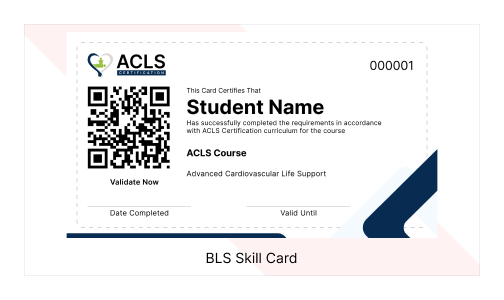
- Instant downloadable wallet card: Receive your BLS wallet card immediately upon certification and be ready for emergencies.
- Learn at your own pace: Complete the BLS course online on your schedule, allowing flexibility to balance your time well.
- Cost-effective: Save money with our online certification as we offer affordable courses compared to traditional classes.
- Access course modules anytime, anywhere: Study and complete the course from any device, and get certified with a basic life support course from the comfort of your home.
How Do You Choose an Online BLS Provider?
Accreditation
Ensure that the provider is nationally recognized & offers a valid certificate.
Course format
Choose a course that is flexible and offers self-paced learning.
Certification validity
Choose a provider whose instructors are BLS certified & offer customer support.
Cost and convenience
Compare prices and select a provider that fits your budget and schedule.
BLS Course Curriculum
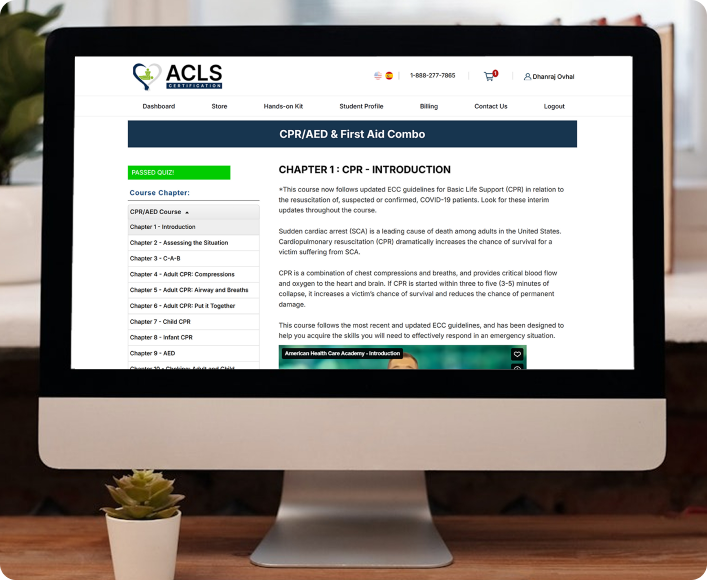
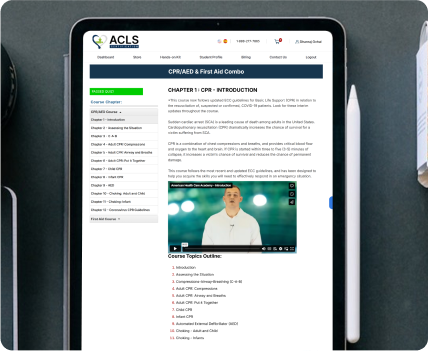
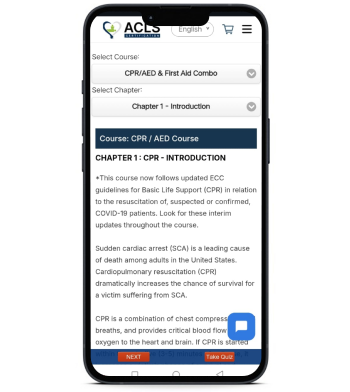
- Introduction
- Assessing the Situation
- C-A-B
- Adult CPR: Compressions
- Adult CPR: Airway and Breaths
- Adult CPR: Put it Together
- Child CPR
- Infant CPR
- AED
- Choking: Adult and Child
- Choking: Infant
- Coronavirus CPR Guidelines
BLS resource links
How to get BLS certification?
Becoming BLS certified is simple and can be completed in a few simple steps:
- Choose the course: Select our nationally recognized basic life support (BLS) class and meet industry standards.
- Complete the training: Study the course materials, access them anytime, anywhere and complete the training.
- Pass the quiz: After finishing the basic life support training, take the quiz and pass successfully to show your understanding.
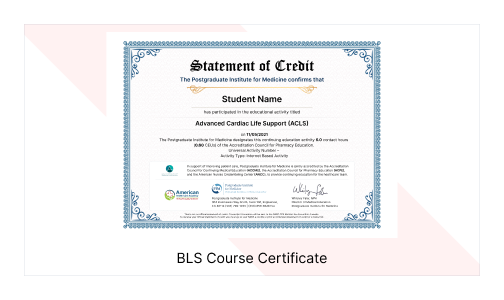
- Receive your certification: Once you pass, you will receive an instant downloadable BLS certification card, valid for two years.
What BLS Certification Covers
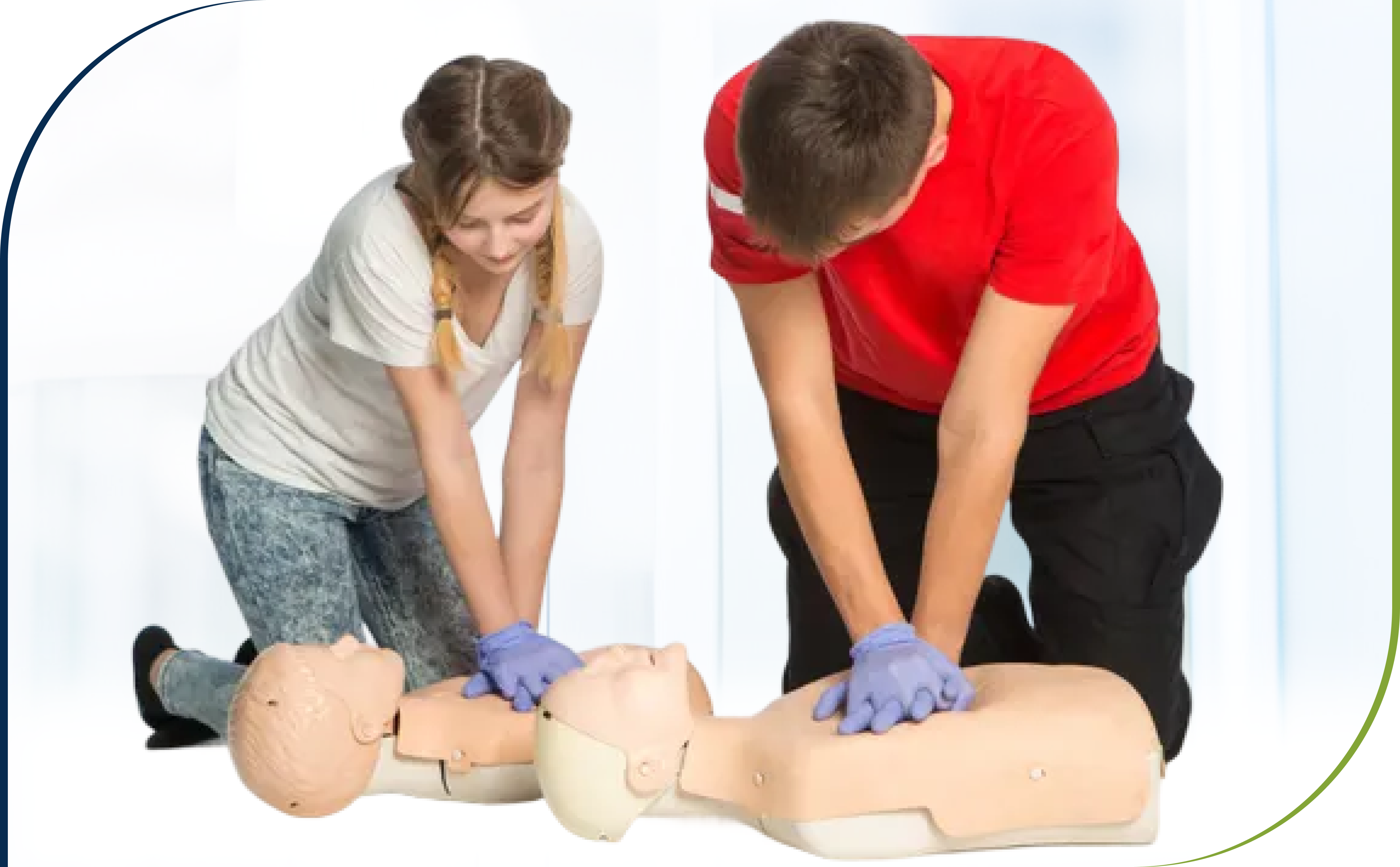
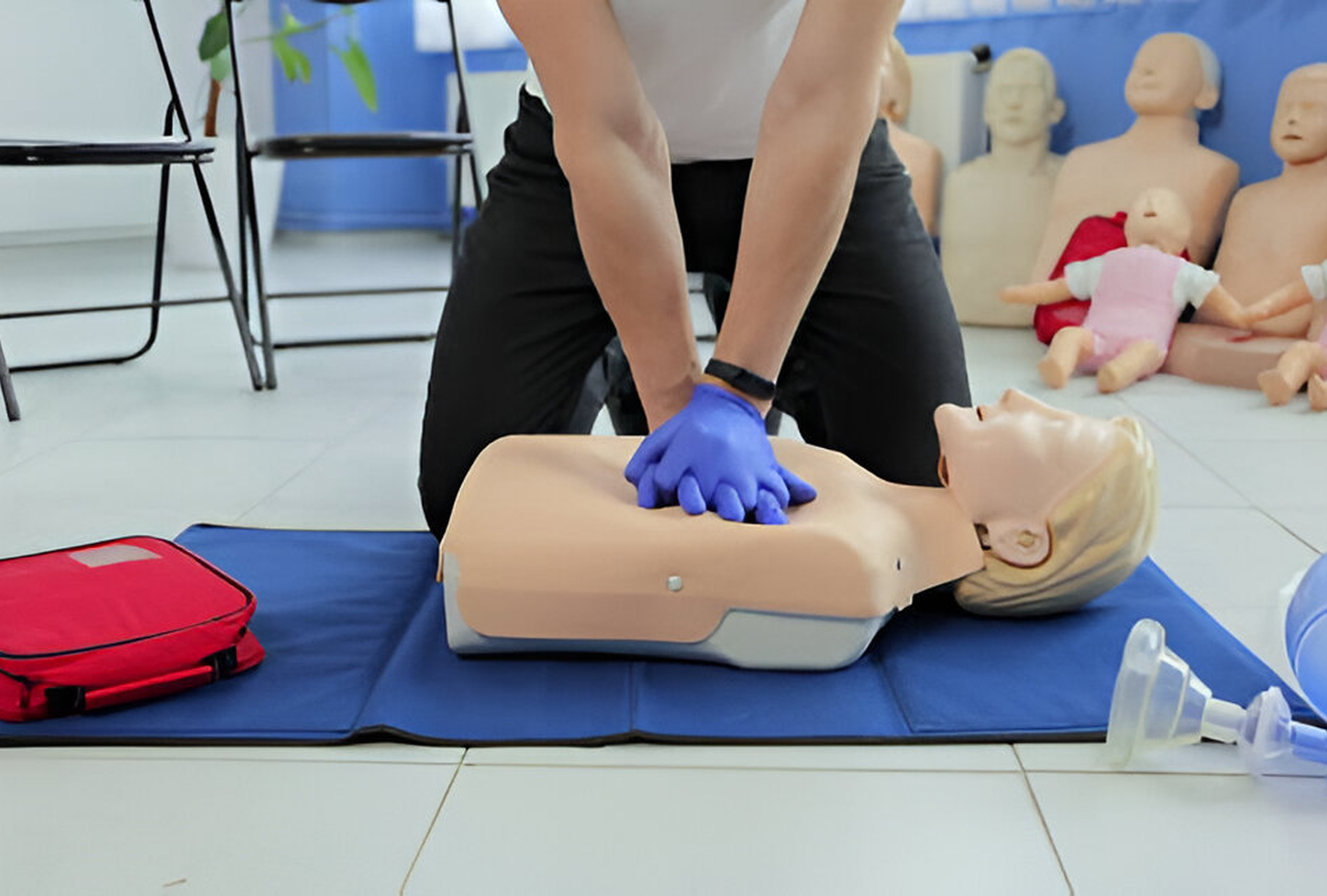
BLS certification, or Basic Life Support certification, teaches the core resuscitation skills every healthcare provider and many non-clinical staff are expected to know: adult, child, and infant CPR, proper use of an automated external defibrillator, and relief of choking in all three age groups. The course also covers current guidance on high-quality chest compressions, airway and breathing management, and team-based resuscitation when more than one rescuer is present.
Because BLS forms the foundation for ACLS and PALS, the skills you learn here carry directly into those advanced courses if you pursue them later. Upon completing the coursework and passing the certification exam, you receive a wallet card and certificate valid for two years, accepted by hospitals, employers, and licensing boards nationwide.
Who Needs BLS Certification
BLS certification is required or strongly recommended for a wide range of roles, including nurses, physicians, EMTs, dental staff, and allied health professionals working in any setting where a patient could experience cardiac or respiratory arrest. Many non-clinical roles pursue BLS as well, including teachers, fitness professionals, childcare staff, and workplace safety officers who want to be prepared for an emergency.
Healthcare employers typically require BLS as a baseline credential before staff can advance to ACLS or PALS certification, since those courses assume BLS-level skills are already in place. If your job description lists CPR and AED certification as a requirement, this course meets that need.
How BLS Certification Works Online
Enrollment gives you immediate access to every chapter covering adult, child, and infant CPR, AED use, and choking relief, all of which you complete at your own pace. The certification exam is untimed and allows unlimited attempts, so you are not penalized for needing extra time on any section before testing.
Once you pass, your digital wallet card and certificate are available immediately, with mail and print delivery options for a physical copy. Most learners complete the entire course, from enrollment through exam, in about two to three hours. Your certification is valid for two years, after which you can renew through our BLS recertification course.
AHA/ECC Alignment and Employer Acceptance
ACLSNow’s BLS course is built around the same resuscitation science reflected in the American Heart Association’s ECC guidelines for CPR and emergency cardiovascular care. ACLSNow is an independent certification provider and is not the American Heart Association, and that distinction matters if your employer’s policy specifically names an AHA-branded card rather than ECC-aligned training generally.
Most hospitals, employers, and licensing boards accept ACLSNow’s BLS certification as valid proof of competency, since the training content matches current CPR and AED standards. If your workplace requires confirmation of accepted providers, check with your compliance office before enrolling, since policies on accepted certifying bodies vary by institution and industry.
BLS Renewal and Recertification
BLS certification is valid for two years from your exam pass date. As that date approaches, you can renew through our dedicated BLS recertification course, which reviews the same core CPR and AED skills in a condensed format for providers who already hold a current or recently expired card. ACLSNow does not publish a universal grace period, so the safest approach is renewing before your certification expires rather than after.
If you also hold or need ACLS or PALS certification, ACLSNow’s ACLS PALS BLS combo covers all three credentials in a single enrollment.
Ready to
Advance Your Career?
Become BLS Certified on Your Schedule – Learn at Your Own Pace and Save Lives with Confidence!

Frequently Asked Questions
BLS certification, or Basic Life Support certification, verifies that you can perform adult, child, and infant CPR, use an automated external defibrillator correctly, and respond to choking emergencies. The course covers current resuscitation science, including high-quality chest compression technique and team-based response when multiple rescuers are present. Certification is earned by completing the online coursework and passing a final exam, resulting in a wallet card valid for two years. Hospitals, employers, and licensing boards widely accept BLS certification as proof of core life-saving competency for both clinical and non-clinical roles.
Healthcare providers including nurses, physicians, EMTs, and allied health staff typically need current BLS certification as a baseline credential, often required before advancing to ACLS or PALS training. Many non-clinical roles pursue BLS certification as well, including teachers, coaches, childcare providers, and workplace safety officers who want to be prepared to respond to a cardiac or respiratory emergency. Some employers require BLS renewal on a set schedule regardless of role, while others require it only for staff in direct patient contact. Checking your job description or employer policy is the easiest way to confirm whether BLS certification applies to your position.
Most learners complete the full BLS certification course, including all chapters and the final exam, in about two to three hours of self-paced study. Because the course is entirely online, you can complete it in one sitting or spread it across a few days, whichever fits your schedule better. Once you pass the exam, your digital wallet card and certificate are available immediately, so there is no waiting period between finishing the course and having a usable BLS credential. Unlimited exam attempts mean you are not penalized for taking extra time to review any section before testing.
BLS and CPR are related but not identical. CPR, or cardiopulmonary resuscitation, refers to the specific technique of chest compressions and rescue breathing used during cardiac arrest. BLS, or Basic Life Support, is the broader certification that includes CPR technique for adults, children, and infants, along with AED use, choking relief, and team-based resuscitation response. In other words, CPR is one component taught within a BLS certification course, not a separate credential. When an employer requires BLS certification, that requirement already includes CPR competency as part of the broader skill set.
BLS certification through ACLSNow is valid for two years from the date you pass your exam. This matches the standard validity period used across BLS, ACLS, and PALS certifications, which makes it easier to track renewal dates if you hold multiple credentials. As your two-year period approaches its end, you can renew through the BLS recertification course rather than repeating full initial certification. Keeping a shared renewal calendar for all your certifications is the simplest way to avoid an unexpected lapse in any one of them.
Being BLS certified means you have completed an accredited Basic Life Support course and passed the certification exam covering adult, child, and infant CPR, AED use, and choking response. The credential is documented with a wallet card and certificate valid for two years, which you can present to an employer, licensing board, or school program as proof of training. BLS certification is typically the first resuscitation credential healthcare providers earn, since ACLS and PALS courses build on the skills it covers. Employers across healthcare, education, fitness, and childcare commonly list BLS certification as a baseline hiring requirement.